
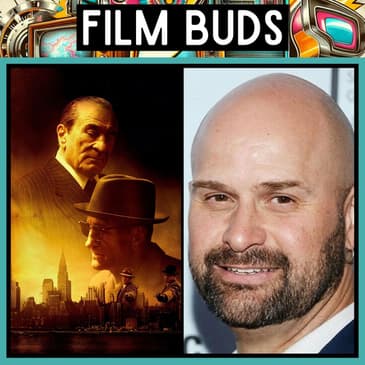
Prosthetic makeup artist Richard Redlefsen joins Henry to chat about getting started in the film makeup world, his experiences on projects like Queer, Maestro, The Alto Knights, Bombshell, Gaslit, and Killers of the Flower Moon, the daily challenges of applying and maintaining prosthetics during shooting, the differences between extensive and minimalist makeup, and much more. NOTE: Due to connection issues, there is no video version of this episode available on our YouTube page. Sorry for the inconvenience!
0:00 - Intro
1:47 - Career Beginnings
5:01 - Bombshell / Maestro / Gaslit / Queer / The Alto Knights
12:52 - Timeline of Prosthetic Application
21:13 - Challenges of Minimalist / Realistic Makeup
24:42 - Outro
Follow Film Buds:
Follow Henry & Elle on Letterboxd:
Buy Our Premium Podcasts:
Sponsors / Inquiries:
FilmBudsPodcast@gmail.com
[00:00:00] You don't want to erase the actor. It's the actor becoming that person and the makeup is a vehicle for them to then create that character through their movement, through their speech, through their posture. You think he's queer? I've been spending time with him. I can't tell. Well, could always just ask. No, no, no, no, no, no.
[00:00:24] Hello, everybody. Welcome back to the Film Buds podcast. This is episode number 575 and my name is Henry. This time around, I have an interview with prosthetics makeup artist Richard Redlefsen, who has, if you name a project with extensive prosthetics over the last 10 or 15 years, he's probably been a part of it, including Queer, A Different Man, Maestro, Gaslit, Bombshell, Killers of the Flower Moon,
[00:00:54] the list goes on and on. It was a great conversation. We talked about him getting started in the world of prosthetics, his experiences on a lot of those projects I just mentioned, the challenges that he has to deal with on a daily basis with prosthetics, and a lot more. So thanks again to Richard for taking the time. Really do appreciate it.
[00:01:16] There is only, unfortunately, a static audio version of this on YouTube. There were some technical issues, so I wasn't able to have a really reliable video. So apologies for that, but it was still a lot of fun. As always, please make sure to rate, review, subscribe, all that good stuff, and thank you to all those who have.
[00:01:40] Well, without further delay, let's go ahead and take a listen to my interview with Richard Redlefsen. Hey. What's up? We made it. How's life for you? Pretty good. Cloudy day today. Yeah. How did you get started in prosthetics makeup? Was that always your goal? Did you stumble into it? Like, how'd you get yourself going?
[00:02:04] I kind of had a different journey than most of my colleagues or peers, or most people that actually get into makeup effects. I used to be a professional ballet dancer before I did makeup, so I did that. I started when I was young, probably around eight or nine years old, and kind of got the performing bug, doing stage work and theater and just all the pomp and circumstance that goes with the theater.
[00:02:34] And basically, I would do my own makeup for the shows. And I remember specifically, the first ballet I did was called Coppelia. It was basically about a mad scientist that he creates life-size dolls, and they come to life and all of that. So the town kids basically, because it feels like it's in some alpine village or some city in Germany or something like that.
[00:03:00] The kids play a joke on him, and they kind of replace one of his dolls with one of themselves, and they dress up like the doll, and they come to life, and they basically play a trick on him, right? So the lead doctor, Dr. Coppelia, who was the creator of this doll, he had a really, quote-unquote, character makeup that I always thought was really interesting.
[00:03:25] Big bushy brows and a big mustache. I mean, he's kind of like a Drosselmeyer from a Nupcracker. So I remember that specifically, and so I kind of did my own makeup without any training. The ballet mistress or master basically came up to me and said, you've got to take that off. It looks too much. You know, so I completely overpainted myself. I think the spark of it kind of came from theatrical makeup.
[00:03:54] I had gotten the Richard Corson's book of makeup, theatrical makeup. You know, learned how to make a small prosthetic nose. Basically took a measurement of my nose and made a sculpture on a plate, a dish I had with clay, and made a little cylinder mold around it. People started asking me to do their character makeups if I didn't have like a big show or something like that. So, I mean, there's always been the love of drawing and painting and a little bit of sculpting.
[00:04:25] But only until I really got into prosthetic makeup did sculpting actually have kind of take foot. So, yeah, I think my first impressions of makeup or makeup effects was more from the theater.
[00:04:44] I wasn't like a Fangoria kid or like, you know, I saw a few horror films, but it wasn't like waiting for the next Freddy film or, you know, Jason film to come out. So, I mean, that's kind of the crux of how I got into makeup. Well, once you got onto doing films, did you then start to kind of take more notice of film prosthetics work?
[00:05:10] Or let's say modern, because I know you're just talking about older films, but then were you starting to maybe notice prosthetics more? Or just maybe just be paying more attention to what was going on in film then? You know, obviously, like when we, before I got into makeup, I never saw makeup, prosthetic makeup as a profession. Like, I just kind of accepted that I never really thought about who did, who actually did that. Who made Freddy Krueger look like Freddy Krueger, right?
[00:05:39] And so, yeah, after I got into, after I started going to makeup school, yeah, of course you start looking. Because you, you have projects that you have to do in school. And so you're looking for inspiration, you know, whether it be real life or your take on what a Frankenstein might be or a phantom or, you know, like, so, so yeah, I definitely looked at, I looked at films in a different way.
[00:06:10] It's weird. I mean, I have to be honest. For someone who's in the film industry, I see very little content. I don't know if that's a good thing or a bad thing. It's just kind of like, you can be inspired by it. Or I think a lot of times, like, I actually just went to see, I saw Alto Knights, which I worked on. That's the first film that I've seen in a theater since Maestro. That I did the bookends of the film with Kazu. I mean, Kazu did the whole film.
[00:06:40] And that was a crew screening. I mean, we have two daughters, so it's really hard to get out and see. My wife wanted to go, you know, but getting a babysitter and all that. So I know what's out there. I know who's done what. But I don't get by an inspiration, like, for personal projects from that. Personal projects are more just kind of like, I see things and I try to cobble them together.
[00:07:10] If I'm working on, like, an Alto Knights or Maestro, you know what I mean? I have, like, the designer is usually the one who's making those decisions of what the character or the makeup should look like. And a lot of times I can give my two cents in that. But nine times out of ten, I'm mostly the applicator. So I'm applying it on a daily basis.
[00:07:36] So, like, for Bombshell, Kazu, who's a two-time Academy Award BAFTA-winning makeup designer. He did The Darkest Hour. I did Bombshell with him. He also did Maestro, Bradley stuff. For Bombshell, we were doing John. I did John Lithgow. Come in, we'll test. Do the test makeups. He'll watch.
[00:08:05] And I remember on Bombshell, that was the first show that I had done with him. But he would watch in the corner every day for 40 days of shooting or whatever it was. Kazu would always be in the corner watching and making sure we're doing it right. And then I did Gaslit. And then, because he knew me and he trusted me more and kind of the direction it was going, this was the Sean Penn makeup. He was there for probably the first week.
[00:08:33] And then, you know, and then I basically would, watching us apply. And then he just let us go and do it. Jason Hamer, who also has an effect shop, was the designer for Queer. And they basically did the Jason Schwartzman's makeup as Alan Ginsberg, basically loosely inspired by Alan Ginsberg, and the age makeup on Daniel Craig.
[00:09:02] So Jason, Jason's job gets the job because Luca had worked with them on Lovely Bones or what is it? Bones and all? Bones, yeah. He remembered them from them and wanted to work with them again. You gather information. You gather as many photos that you can from those people. And then you try to cross what gives the feel.
[00:09:29] Because these are character makeups, you know, or likeness makeups. So no one's ever really going to look exactly like the character. You can put the two same prosthetics. The same prosthetics on two different people. And they will look different in them because of their faces different. So it's that kind of push and pull. And I enjoy watching designers. I mean, I do design my own kind of things. But I haven't really designed a lot.
[00:09:59] With Queer, I'm sure Luca and Jason met up. And they basically talked about what they wanted. And I mean, obviously, Alan's at a certain age was bumpier. You know, so we definitely had to do like a heavier set makeup on Jason. Because Sportsman's pretty lean. It was a big kind of neck, cheap wrap around. He had a separate chin, forehead. I think a nose, but I have to look at it. I don't.
[00:10:28] And a back in the head. Maybe not a nose. And then a full beard on that. Because it was the kind of bearded Ginsburg years. So with a scanner, life cast of the actor, you basically do rounds of sculpting to see what's too far. What can be either traditionally or digitally. Because many are starting to design sculptures in the computer.
[00:10:56] So not even a swath of clay is really used in the designing part. Because they can switch it and correct it quicker than the old school way. So there's all of that. Directors will chime in on like a clay sculpture, which a lot of times is hard for them to envision. For example, I'm doing a personal project. I'm doing an Edgar Allan Poe likeness makeup, right?
[00:11:26] So it's on a friend of mine. But, you know, so I don't have to go through the whole director like approval and all that. It's kind of my approval. But at this point, like this is, they would see something like this, you know? So it's basically just the general forms in clay. So a lot of times it's tough for them to kind of get an idea because it's brown clay. They don't see what it would look like on the actor.
[00:11:55] So from this, you could take this. You could Photoshop it. Put some fleshy kind of tones in it to make it look like. And then you can get like a rendering that they could kind of see what it is. When you design it in Photoshop, but in the computer, you know, I mean, you can just do all these programs where you basically put a blanket of flesh on it. And they can kind of get a rough idea of what it will look like.
[00:12:18] You have tests, hopefully two or three or four rounds of tests if things aren't landing where they want to. Like on Alto Knights, I mean, we did 50 applications, like probably 50 or 60 applications. Probably 25 to 29 applications of each look on De Niro. And you just get better and better.
[00:12:46] And you know where you can cut corners or, you know, what is it really needed? How it's pared down. Obviously, it changes every time. How long does it take to apply something like that? Let's say like Alto Knights or Queer, like a range of you having to actually apply for a single character. Well, Alto Knights, the Veto makeup, which is the more full coverage, that was two hours and another like 10 minutes, 15 minutes for his wig application.
[00:13:18] Queer, I think that was more like two and a half. Because we would get the pieces on in probably like an hour and 45. But then we had all the lace pieces. So you've got brows, he's got a full beard, and then you have to do the overlay, which basically is like a loose individual hair kind of lay that kind of hides the lace. And then you've got to go in with like Marcel irons or little like mustache irons that heat up.
[00:13:48] And then you can kind of put a little curl. We say you put a bump on it. So it kind of gives a little fullness, right? And it doesn't look like it's just like straw that's just laying flat there. And I think, you know, when you're getting into four hours, that starts to get long. Now, I will say that I think Americans are quicker than most. I think they really, I know what they do in other parts of the world.
[00:14:16] And I'm not taking anything away from them. I mean, obviously, the talent is wonderful and the skill is great. But I will say that Luca did mention, because we shot this at the Cina Cinta Studios in Rome, which was epic in its own right. That was a blast. I mean, because I'm a huge Fellini fan, as well as like Sergio Leone. And like all that stuff was done there.
[00:14:42] But Luca basically said, was really impressed how quick we are. So you can look at, I won't say, but you can look at his resume and what other films he's done with other prosthetic makeups in them. And we were significantly faster at getting them done and arriving to a good quality. And I will say this about Jason Schwartzman. Press thought he had gained weight. They didn't even think it was a makeup.
[00:15:11] And he's a good dude. Great guy. Great guy. Really, it's funny because we have a lot of products that we use in the production of prosthetics. Like there's a company called Smooth On where you have like silicones and urethanes and all kinds of stuff. And he knows all those products because he uses them more for like art projects. But I think the whole thing is, is that you start the tests and the tests are a good barometer.
[00:15:40] And if you can do the makeup in like two and a half hours, you'll probably knock at least a half an hour to 40 minutes off. You know, so that's all value added for the actor so they don't have to spend as much time. Is the process at the end of the day quick then? Or does it take a long time to take it all off? It kind of depends on the actor, right? I mean, Sean Penn on Gaslight basically would just take his gullet and just rip it off.
[00:16:09] All right, cool. And Julia Roberts would be freaking out because this is just, oh, that looks so creepy, blah, blah, blah. De Niro's, I would say probably half hour. Half hour, 40 minutes. It depends on are they working every day? You know, you have to usually remind sometimes the actor not to pull it off. I mean, the glues that we use, the germ of them are the toupee glues.
[00:16:39] So like when you would get your toupee put on and they would use these adhesives that can last like a month and a half, two months. Those adhesives are kind of the grandparents of what we use now. They're meant to last, maybe not two days, but they're meant to hold solidly for a day.
[00:17:04] And you can hurt your skin if you try and just rip it up. So we go methodically and slowly. And I've had times where we basically took a hot towel. Actor has the prosthetics on. We kind of give them a little bit of steam. The steam creates sweat. Sweat kind of undermines the piece. It's typically at the end of a, that would be after like a short day.
[00:17:33] But at the end of a long day, they've been in it for anywhere from 12 to 15, 16 hours, you know. And it naturally will, their oils in their skin create it. Sweat and heat is really our enemy because it's, it undermines, you know, adhesion and strength of the makeup. So.
[00:17:58] Have there been any, even if in the ones that we've talked about or, or others where the challenges have been particularly striking? Anything stand out to you as like kind of the reflective moments of your career? Like, wow, that was, could have been still very rewarding, but man, this was really challenging. And this was something I'd never encountered before. Is there anything that really stands out to you as an experience like that? Or does doing real people, does real people present a challenge as opposed to a fictional character?
[00:18:26] No, I mean, if it's realistic, like if it's not like a creature or a zombie or, you know, something like that, it still has to feel in the realm of, of realism. I mean, I think they all kind of have their minor challenges. I mean, you know, most of what we do during the day is kind of upkeep.
[00:18:45] Making sure that the small, thin, feathered edges that are what, where the piece, the prosthetic, particularly in a silicone encapsulated prosthetic blends into the skin, where it quote unquote disappears. It's keeping that undetectable. We use like this edger to basically melt that thin edge into the skin.
[00:19:13] And so, you know, sometimes little, little things will come up and you just have to melt them back into the skin, a little bit of color. And I think the challenge is, is that everybody knows what a real person looks like. You know, they know, they know what doesn't feel real.
[00:19:31] I was just having lunch with a friend and he had seen Alto Nights and he's like, I think the Vito makeup completely works, but it's always in the back of my mind that that's De Niro. So I'm kind of looking for it because that was the more full coverage one. Whereas the Frank was less of, uh, less of a character and more, uh, De Niro, right?
[00:19:58] Cause that was a nose and upper lip and kind of eye bag covers. And he had a small little piece down here, but, but you know, it's De Niro and you accept it. You kind of let it go. Whereas the Vito makeup, which we were really proud of, you know, I think it, it moves well and it looks well, but there's always the back of your mind. Well, that's De Niro under that. So you're kind of like, do you buy it or do you not? I mean, when I went to the theater, it was just like, you know, it was two hours of holding my breath.
[00:20:27] Like, is this going to look good? In the light, I would say 99% of the time it held up, you know, there's a few little things, but that's a really good track record. And I know, I definitely think it has, uh, the legs to, to win stuff. And it was a gangster film with Robert De Niro, man. I mean, that's, that's a career highlight because those are, those don't happen. So you got to work the problem.
[00:20:55] As they say, you work it, you figure it out. And as you go, you kind of, you know, things can be redesigned and then re tweaked. And, you know, you just keep trying to make it better and better and better. And that's the journey through the, through the filming process. So is there anything that you wish more people knew the average movie goer knew about prosthetics makeup?
[00:21:20] Because I feel like prosthetics is the thing that I love going to a theater and noticing the prosthetics because of how great it is. Like, Hey, that's Frankenstein. It's, you know, Robert De Niro is this gangster. And, but then at the same time, you don't want it to be so much so where like, as you're kind of mentioning that it's okay. I can't buy that. This is the real character. I think the general audience thinks that what would be seen as the simplest makeups are actually the hardest.
[00:21:49] So I did the first two weeks of filming on Killers of the Flower Movement and I was doing Leo's nose. That's a prosthetic that is probably the size of a quarter. I mean, I would do his makeup in about a half hour. That was probably 10 minutes, 12 minutes to put the piece on, blend it, color it, then to do a little bit of foundation, a little bit of color.
[00:22:17] And again, I was filling up, filling in for Sean Grigg, who's his makeup artist. And she took over the show because she were, she just had some visa problems. She's from the UK. But I think the main thing is, is that when you really don't see anything, those are the harder makeups than when you really see everything. When you see a creature or a demon, man, that's a cakewalk, man.
[00:22:46] That's a, you know, that's a walk in the park any day of the week. Give me a zombie. If I want to have an easy day, I'll take a zombie makeup over a realistic makeup. Because a realistic makeup, it's got to be that much tighter. From Bombshells, Alto Nights, to Queer, to Amundsen, which is a Norwegian film with a lot of age makeups.
[00:23:12] You're basically in the village or behind a monitor every take, unless it's a wide. And you're making sure that everything looks good. So it's a lot more work. Like a Freddy Krueger or, you know, I mean, I did Jeepers Creepers was my first screen credit. And back in the day. And that's just fun. It's just a fun makeup.
[00:23:42] Not, I mean, it has its own challenges. I'm not diminishing them. I'm just saying that I think that the general audience thinks it's easy when you can just put a nose on somebody and that's it. There's this whole idea of bigger means harder, which is not true at all. Richard, I really appreciate you taking the time. And thanks again for dealing with all the technical difficulties. It's all good.
[00:24:10] It's like we've had kind of the bad luck the last couple of days of just weird connection issues. But I would love to have you on again sometime soon to talk more projects. And you've been a part of so many amazing films that I really hold close. And those prosthetics are so essential, you know. And so I should, yeah, I really appreciate you taking the time. I feel like I've learned a lot already. And so, yeah, I would love to have you on again sometime. Yeah, anytime. Thanks for the interest. It's been fun. Thank you for considering. Yeah, all right. Take care.
[00:24:40] I'll see you. All right. Bye-bye. All right. Well, there you go. Thanks again to Richard. Would love to have you on again sometime soon. So sorry about the technical issues and that we weren't able to have the video version available. But hopefully it was still good for you. Don't forget to rate, review, subscribe, like, follow, all that stuff. Share with your friends, please. And thank you. Hope you enjoyed it even half as much as I did. And I'll see you next time, y'all.