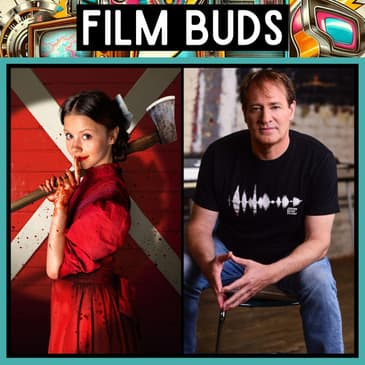
Composer Timothy Williams joins Henry to chat about his career beginnings as a musician, his work on projects like A24’s Pearl, Netflix’s Agent Elvis, Mary (2024), Get Out, Brightburn, his new film Locked, as well as his collaborations with Tyler Bates on Guardians of the Galaxy Vol. 1 & 2, Watchmen, 300, and much more! Thanks again to Timothy for taking the time!
0:00 - Intro
1:32 - Starting Out in Music (Guardians of the Galaxy / 300)
5:47 - Pearl
10:21 - Mary (2024)
16:01 - Characters & Themes in Composing
21:50 - Agent Elvis
30:03 - Outro
Follow Film Buds:
Follow Henry & Elle on Letterboxd:
Buy Our Premium Podcasts:
Sponsors / Inquiries:
FilmBudsPodcast@gmail.com
[00:00:00] The reference to the Wee Wee Marie which is used in the Scarecrow sequence, that was something that Tyler had done. It's an old song, Tyler had done an arrangement of it for X and so the challenge on that was to do it as an Easter egg so it's incorporated into each film, this version of it in each film that you hear. Why are you leaving me? I do like you, I just- Tell me the truth! How did you change?
[00:00:28] You're scaring me, Pearl!
[00:00:30] Hello everybody, welcome back to the Film Buds Podcast. This is episode number 573 and my name is Henry. Got a great interview for you this week as we always do but it is with composer Timothy Williams who got started collaborating with composer Tyler Bates on films like Watchmen, 300, Guardians of the Galaxy 1 and 2, the list goes on and on but he himself has done
[00:01:00] A24's Pearl, the new Netflix film Mary, the Netflix series Agent Elvis. It was just a great conversation so very excited for you to hear it. As always please rate, review, subscribe, like all the things and thank you to all those who have. Really appreciate it. Hope you will stick around because we have not only this one but many many more interviews to come so stay tuned.
[00:01:24] But let's go ahead and get into my conversation with composer Timothy Williams. So take a listen. Hey! Hey, how's it going? That's good, how are you? Good, thank you. How's life first of all? What you been up to? Have you been busy? Have you had a time off? What's been going on? A little bit of time off. I'm doing a video game for Warner Brothers which is exciting working on that.
[00:01:49] And I'm doing some orchestration actually on a very cool TV project that I can't really discuss but it's pretty cool. So that's kind of where I'm working on at the moment. Awesome. How did you get into composing? Was that something that you had wanted to do since you were young? Or is that something that you kind of stumbled into? Like how did you come across it all?
[00:02:16] I started out learning piano and found that while I loved a lot of the pieces I was learning I was also kind of interested in some of the pop music of the time. And that sort of led me to kind of playing around and sort of creating stuff. Like one of the tracks in particular was like Live and Let Die. I love that song, Paul McCartney song. So I was kind of like, yes, I really want to write music and maybe write songs too.
[00:02:44] So that kind of started me off. But I did have composition lessons since I was really, really young. I gravitated I think mostly towards film music. That seemed to be the most interesting thing that I could do. Well, what were some of, if not one or many of the projects that you first felt like, okay, I'm kind of maybe in the business now, so to speak. Or like I feel a little bit more established.
[00:03:13] Like what were some of the first ones that you got to be a part of that you actually really got to make your own music for? So I began really as an orchestrator for Tyree Bates. And I was very fortunate to kind of start almost at the top of the industry. It's very unusual, but literally the first film I orchestrated was Slither, which is a James Dunn film.
[00:03:39] And then the second film that I orchestrated was 300 and got to conduct that. And of course, that was a huge film. But with 300, I got to do a little bit of writing on it. And with Watchmen and Sucker Punch, I got to do more and more of that kind of additional music. So it was really like a great way to come into the industry because it was not like, oh, you're responsible for an entire film.
[00:04:07] I got to do a couple of cues on these films. And that gave me an understanding of the process of how to write music for film and how to create tone and how to tell a story.
[00:04:19] But without the full pressure of having to score the entire film and the full, you know, it's very hard when you're, you know, so much of being a composer is liaising with directors, liaising with producers, having discussions about what the music should sound like, being able to make adjustments if there's some notes on the music that you're providing. So all of that stuff takes a bit of time to learn.
[00:04:43] I, when I began to do more composition and write film scores, I sort of took a big step back in terms of doing smaller budget indies. And that was kind of how I began to grow my independent kind of composition career. But obviously, you know, I still work very closely with Tyler Bates and on Pearl. That's a great opportunity to collaborate as a, you know, full composer on that.
[00:05:13] And other projects as well that I've done with him. But yeah, no, the last, I'd say four or five years, I've had so many films where I've been able to kind of be the lead composer and all that training, almost like 10, 15 years of training was really helpful because there's a lot of technical things you need to learn about scoring films apart from just writing music.
[00:05:40] There's a lot of technical stuff and doing additional music starting out that way was a great way to get into the industry. I do want to get into a couple of the really recent ones like Mary, but I did want to ask you about Pearl as you're just talking about. And my wife, for one, is truly obsessed with that movie. And I think that trilogy is one of the most unique and Pearl specifically is one of the most original movies probably that I've ever seen.
[00:06:09] Like it's such a, it came out of nowhere and it didn't need to exist necessarily. But the fact that it does in that way is so interesting. And the music, I think it, I mean the whole movie, but the music really does feel like it is very traditional. Like it almost is like Wizard of Oz or something in that way. Very orchestral and maybe it was easy to do or maybe it was hard to do. I feel like that project is so, you kind of have to find the right tone to get it right. Yeah.
[00:06:39] I mean, Pearl was one of those dream projects where, and it happened right, right in the middle of COVID. You know, it was filmed in COVID. That's why it was created was they were flying out to do X to New Zealand. And Ty West sort of had this idea of why don't we do, you know, they spent so much time creating the character Pearl, which is also played by Mia Goff as well as Maxine.
[00:07:06] He thought, why don't we've done all this research on creating a backstory. Hammer out there. Why don't you just film the backstory? And they got the green light pretty much as they landed in New Zealand. So, and everything with COVID was, there was no rush to get back to LA. When I got the film, the schedule was pretty quick because X was coming out and they wanted to announce Pearl kind of right on the tail end of the film as kind of a teaser for it.
[00:07:37] And because of COVID, everything was pretty locked down in LA. So a lot of it was just me in a room with the film, kind of in a darkened room with the film. So it was, you know, it was one of those periods of times where I really didn't have a lot of interaction with people. It was very much an isolated task. And it was a bit of a dream job in that the request for the score was to sort of feel like that golden age of Hollywood.
[00:08:04] The idea was it's basically an Alfred Hitchcock film. So you're looking at people like Bernard Herrmann and Matt Steiner. And it's all the stuff that you learn in film school, but no one ever wants, you know, there's not a, you know, very direct. No, most directors don't want, it's a very specific style. And most directors don't, would never ask for that.
[00:08:27] So this was a kind of an unusual ask, but it's that kind of thing that you dream of being able to do, create a theme and blow it out. And right in that style that is that kind of golden age of Hollywood. So it was very specific in terms of what the goal was with the score. Was there a lot of like trial and error or was it?
[00:08:52] No, I mean, I wrote pretty much wrote the main title and sent that in and said, what do you think about this? The opening that came the theme of the movie. Yeah, the response was, yeah, this is exactly it. Keep going. And so, you know, Mia Goss performance in Pearl is so compelling. It's such an out of the box story that it just, it just seemed to lend itself and it just seemed to eat up that whole kind of sound.
[00:09:22] It was precisely that it wasn't a long scoring process. I think it was two months was pretty quick to write, to write it. But so we, you know, we were against the clock and then obviously producing it was tricky during COVID just because recording with live musicians was really tricky. You know, everyone had to be masked up and, you know, everyone had to be a certain number of feet apart.
[00:09:48] So then that limited the number of musicians you could have in the room at a time. And it was, it was a very, very difficult time for recording scores. But, you know, the film was a lot of fun. It turned out well and it holds a special place in my heart for sometimes when I think when you have that opportunity to really focus on one project and kind of do that stream of consciousness writing.
[00:10:13] It's difficult to replicate on other projects because the usual process for film scoring is very different than that. How about something like quite recent, like Mary, which is this, you know, iconic religious story was that and that was done for Netflix. Was that because it is such a familiar, you know, legendary story? Was that intimidating or did it just feel like another project? Hey, it's, you know, it's a character. It's a story. I'm going to tackle it.
[00:10:43] Or did any of the surrounding elements, let's call it, did that beat into your, you know, process or was that just out of your head? It was definitely intimidating. I definitely felt like I desperately didn't want to screw it up. And to make matters worse, the timeline on that I think is probably the most aggressive timeline I've ever been given. I had 20 days to turn the score around and it's 93 minutes.
[00:11:12] So, and it was, it was one of those films because last year I had a, you know, some really great films that came out. I had Your Monster, which was this really fun rom-com on the audience award, Sundance, and then went on to, I think get up to like number four on HBO Max or something like that. But it's a really fun film. Another film I scored, which is being released in August, is a film called Mistura. So I had a, I had sort of this run of films.
[00:11:42] And then the other film that I was working on is the Locked film, which comes out March 21st, which is Bill Skarsgård and Anthony Hopkins. And the premise is that Bill Skarsgård gets locked, trapped in this, trying to steal this car, Anthony Hopkins' car, gets locked and trapped in it and finds out this is a trap. And that Hopkins is kind of returning to a little bit to his Hannibal Lecter days.
[00:12:10] It's a really intense thriller. Bill Skarsgård's amazing in it. But that was like a three or four month process of scoring that. It's a Sam Raimi film. So it's, it's, it's pretty cool. Dave Yarva, who directed Brightburn, invited me to, to, to score it. So I was like, I literally had these back-to-back films and sort of felt like the year was done. And then suddenly, you know, Mary dropped in my lap and they're like, we want to release this December 6th.
[00:12:38] And this was September the 1st. So I was like, and they said, we've got to have, the score is dubbing September the 23rd because we've got to have time to do all the, what they call subs and dubs, subtitles. And they translate it into every language you can imagine, but it can go globally. But I said, well, that leaves me 20 days to score and produce this, this, this movie. And I, I was like, that's a daunting process. Like I found Pearl tough two months to turn that around.
[00:13:08] And Mary was literally 12 days of writing, 12 days of producing. So I pretty much sat here in this chair at 4am. And I did that for two weeks with the director sitting on the couch behind me. And again, you know, had to sort of write that as a stream of consciousness. But again, I wrote the theme first for it, which the director really liked.
[00:13:36] And I played it for the supervising sound editor as well. And sort of turned around and they had tears in their eyes. So I was like, okay, I guess the theme is working. I want, with Mary, I wanted it to feel like not a typical type of biblical score. I wanted to try to avoid orchestra as much as possible and keep it much more with unusual instruments.
[00:14:01] And my sort of idea was this idea of the ancient and the new modern. And so I used these old Roman instruments. There's a guy in Spain who plays them. Like the carinx is this big Roman horn and the shofar and goat horns and these kind of interesting flutes. I had, and then for the new, I had like synths.
[00:14:25] And also this phenomenal violinist who plays this electric violin, but we run it through all the guitar pedals. So it sort of acts like an electric guitar violin. It's very, very cool. And she used the looping stations. So some of that really kind of interesting, dreamy sound that starts coming in is this electric violin. And then same with the percussion. We used a lot of ancient percussion and modern percussion.
[00:14:56] And the big find, which I'm very grateful to Instagram for, is I stumbled across Julie Elvin. She's very well known as a vocalist for video games, but she'd never really done any film before. But I felt like there was something really interesting about her voice. It's got this very breathy kind of edgy quality to it.
[00:15:18] And so I wrote the theme with her voice in mind and then had her sort of two vocals throughout the film, as well as two other vocalists who had more of that Middle Eastern sound. And then, yeah, the dukes, things like that. And then just some odd instruments, you know, odd stringed instruments, some lyre and, you know, some older, more ancient stringed instruments.
[00:15:47] So that was sort of the concept. And then sort of tacking real strings behind that. So it was ambitious for a 20-day score. But I think it turned out pretty well. Is when you're approaching something like Mary or Brightburn, which is another great movie, is it typically the kind of genre that feeds into the tone?
[00:16:12] Is it a character, the central character, like a Pearl kind of character that makes you think about what this should be? Or is it the world itself? Or does it change every single time? Like what's typically your focus with that first leap into the music? That's a great question. It changes for every film. For me, it's always about trying to find, you know, what is the heart, the essence of the film.
[00:16:38] So, for example, you know, with Guardians of the Galaxy, we wanted a melody that was sort of heroic. And, you know, the term that was used was sort of space opera. This is a space opera. So we wanted something that had that kind of action-adventure feel to it. And we'd get out. The main melody was actually on a harp.
[00:17:02] And it was this idea of hypnosis, of being hypnotized with the teacup. So the melody sort of came out of that, as well as the use of, like, these ancient voices that permeate the score, kind of the cries of these voices. With Pearl, the key in there was her character, but it was her yearning to be a star. It was like her fantasy was kind of the in for that.
[00:17:32] But Brightburn, the in was the idea of this boy potentially being a superhero. So I wanted to create, I created sort of a three-note theme for that. It could have been very positive, but I end up sort of darkening it. It becomes more kind of darker and demonic as the score goes on, and it gets sort of into the low brass as he sort of takes the wrong path in his life.
[00:18:03] So that was sort of the in for that. The in for Locke was quite different. Unlike any score, I worked with the drummer from Marilyn Manson. And he's a really great percussionist drummer. And the idea was to create a challenge that Dave gave me with this, was can we do a score with just percussion? And I was like, I'll try. It's a bit tricky. So we used, like, I used the sort of mallet.
[00:18:32] The idea was being tracked and the idea of this time moving. So, and this idea of sort of claustrophobia and time passing. So to do that, we used this kind of mallet on this low piano, just sort of hitting gong. Gong. Gong. And Gil, the drummer, found this, it's sort of like a huge, I mean, it's a cowbell, but it's huge. I mean, it's like eight feet long and it's deep.
[00:19:01] And so he sort of matched that piano kind of with a little gong. Gong. And it was almost like the sound of, like, water torture, like, the grip on your head the whole time and being worn down. And then from that, we sort of built other kind of percussive elements. But the in for that was literally being trapped, locked in a car and, like, almost like rain on the roof, just tapping through the whole thing.
[00:19:29] And then as things, you know, as the story gets, as the action revs up, you know, you begin to do faster kind of toms and other really cool instruments. You know, so it's always, that's the hardest part of any scoring any film is finding what's the end to the story. Like, what's the heart of the film and how do you express that musically? That's always the challenge.
[00:19:55] And I think that's often what you have the longest discussion about because you you want something that represents what that film is. And that could be a character in the film. It could be the location. It could be, you know, their dream, their aspiration. So, yeah, that but that's the hardest. Once you have that, then for me, scoring processes is pretty is pretty easy. For Mary, it was this idea. The main theme for Mary.
[00:20:25] I think was this idea, this this mix of. Joy and sorrow. You know, because for her, her character is really interesting. You know, she's having a child is this most joyous thing, but she knows ultimately her child is going to be brutally killed. And so. I think sort of trying to create a melody that.
[00:20:53] And again, I wanted it to feel, you know, like it had. A touch of sort of a like that traditional Jewish feel, but I wanted it to feel like sorrowful, but like still there was hope in it. You know what I mean? I was trying to find that. That was the end for me on that. And again, I wanted to avoid any lyric or word on it. I just wanted it to feel more like. And so the theme comes in various places.
[00:21:20] You hear it very poignantly and in some and and sort of more joyous joyously in other places, in the relationships. And but in some places we just want I wanted it to feel like that pure agony. Of the pain and despair that that she goes through and family goes through. So it's trying to find things that can themes or ideas that can be manipulated to fit various emotional states.
[00:21:50] One other project, recent project that is really interesting is Agent Elvis. When I saw that appear on Netflix, I just thought like that is the most like random thing, but so, so clever and creative. I never in a million years would have thought of that or have thought that was a thing. But yours, the score for that is, I think, very unlike some of the other stuff you've or at least the stuff that we've been talking about.
[00:22:18] Like it's kind of jazz clubby, but there's also Elvis-esque vibes. And so is it was it hard? Because you obviously want to have a little reminiscence of of the actual Elvis, but you don't want to have it be like this is just, you know, a direct copy. You just want to have kind of, I guess, as you said, like the heart of the character. Yeah. And so the concept for that, for those who haven't seen it, I think it's well worth a watch. It's on Netflix.
[00:22:48] Agent Elvis is the name of it. And the premise is it's an adult animated series where the premise is what if Elvis were a secret agent? He always wanted to be a secret agent. And I had a great chat with Priscilla about it. And she was like, yeah, Elvis always wanted to be a secret agent. He obviously went to the to the White House to meet Nixon.
[00:23:13] And there was something really very special, I think, about that whole period of time musically in the 60s. You know, you had Vietnam, you had you had so many kind of absolutely iconic bands and iconic music and iconic locations. And so the in for that was creating something that felt slightly James Bond-esque, but it's Elvis's tune.
[00:23:40] So that was kind of that was kind of the fun riff there was was always was kind of trying to bridge that bridge that between Elvis and James Bond. And there's places in the score where you can hear it really sort of tipping into that John Barry S. It's on feel. And then there's other places where it's kind of full on rock and roll and even surfer in some places. And we just had fun because every episode had a different had a different focus and a different style.
[00:24:10] So we were able to pull a lot of that kind of 60s jazz vibe, a lot of that 60s spy. I mean, these are all sort of areas of music that I love. So for me, this was a really, really fun project. And it was spaced out, I think, over the course of about a year because the episodes came because they're animated and just very slowly over that time. So we had quite a bit of time to dig into the music and.
[00:24:39] You know, create a fairly wide array of. Of colors, but that was that was fun. And we and again, we got to work with great musicians on that. You know, Gil was our drummer and obviously Tyler's an amazing guitarist and bassist. So he did that and I'm more the keyboard side of it. So I'd like to be three in the roads and that kind of stuff.
[00:25:01] So we yeah, we had it was a sort of a precursor to the Maxine vibe with with guitars and and keyboards. And that literally happened right after Pearl. So it was a great project to jump on to. But I found the premise really fun. A lot of people, I think, were felt it was a bit blasphemous towards all this, you know, so it got mixed reviews.
[00:25:30] But on the whole, I think it's pretty funny. The cast is amazing. The monkey is actually played by the same actor who plays Spongebob. Oh, Squarepants. Yeah. Yeah. So he vocalizes this really filthy monkey. So I think. It was pretty it was pretty funny. I met him at the at the opening night and didn't realize he was also Spongebob Squarepants.
[00:25:57] But I mean, the cast is that all the guest stars who come in are amazing. And obviously Elvis is is voiced by Matthew McConaughey. So, you know, the casting was amazing. Priscilla plays Priscilla and that it's hard to describe. It's like The Office meets. I don't know. Or weird animated series. But yeah, it's out there. Or something like that because it's animated.
[00:26:25] Are you seeing the finished product or you you aren't? So are you are they they giving you sketches? Are you saying this is what's happening this episode? Go with it. No, no. It's it's pretty specific line drawings. But it's not fully rendered like what we saw, you know, when it was finally came out. I was like, oh, that looks fantastic. We got we got much more detail on it. Or even mid process.
[00:26:49] We might be halfway through scoring an episode and they'll be sending us updates that are more filled in and more colored. But. It was a mix. You know, we'd we'd get cruder drawings with arrows pointing to where they would move. And but the timing was all locked. So you could you could do hit points and know where about where certain things would land. Is that the same thing for like a big movie like Guardians where there's a lot of effects?
[00:27:17] Are you like is that you know, you might see an unfinished product basically or. Yeah. Yeah. I mean, you just use a lot of imagination. You know, for things like, you know, crawl, for example, the alligators are all done with. People in green costumes and a weird kind of like. Puppet on their hands is and with Guardians, we actually had. James's brother.
[00:27:47] Was originally sort of. Was the stand in for for Rocket. Rocket, Sean. And he. So you'd often see him crouching down, you know, so that it would have an eyeline to to the character. But he would always be sort of crouching down being being Rocket. And. You're sort of scoring to that. So you kind of see it. Warts and all. Yeah.
[00:28:15] Sometimes there might be sketches. What's most usual is you'll actually see like a written description. Ship enters. Ship fires. Explosion. Ship leaves. You know, you'll see that flash up. So you know what timing is. But. You won't actually see the ship. You sort of score as though the ship's there. So that's. That's not uncommon for most. Most projects you see here. The VFX is. Is always late to the table. Since we just have a couple of minutes left.
[00:28:44] I know you've already talked about some upcoming things. Is there any anything else about those projects? Anything else that. Yeah. So the big one is Locked is they're doing a theatrical only release, which these days is. Pretty amazing. Most of the stuff now just goes straight to streaming. So. If you want one of those kind of really fun. Pop porn movies to go and. I don't know if it's a date night, but. If you. It's definitely going to be a fun film.
[00:29:15] Bill Skarsgård's amazing in it. He plays a complete moron. The victim of Hopkins' trap. So. You can go. Enjoy it. Definitely. Worth checking out. And if you haven't been to the movies in a while. In a movie theater. It's a fun experience. Just to go and. Grab some popcorn. And watch a good. A really good thriller. Yeah. Timothy. Thank you so much again for. For taking the time. I would love to have you back on again. Sometime soon.
[00:29:45] And. As I said before. My. Both my wife and I. You know. We love the projects you've been a part of. With your music being a really. Essential part. So. You know. We are both big fans. So thank you very much for. For being here. Oh. Thank you. Thank you so much for having me on. Great. Great pleasure to meet you. All right. We'll take care. We'll see you next time. Okay. All right. Bye. Bye. All right. Well. Hope you enjoyed that. Thanks again to Timothy. For taking the time. Really do appreciate it. Please rate. Review. Subscribe. Keep an eye out for all the interviews. Coming up.
[00:30:14] Follow us on YouTube. If you've not already. And as always. Hope you enjoyed it. Even half as much as I did. And see you next time y'all. Bye.