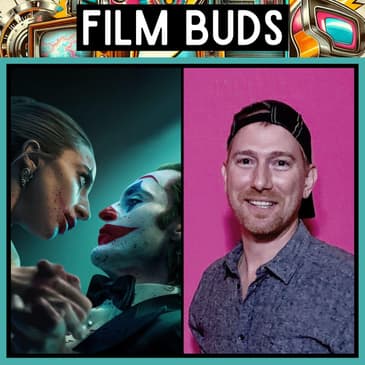
Henry chats with David Meyer about his unexpected career beginnings, the ins-and-outs of being an art director and a production designer, his incredible work on projects like Joker: Folie à Deux, Flight Risk, Top Gun: Maverick, Birdman, and The Wolf of Wall Street, the first films that impacted him, important lessons learned over the years, and much more! Thanks again to David for taking the time!
0:00 - Intro
1:37 - Unexpected Career Beginnings (Men in Black 3)
8:53 - Art Director vs. Production Designer
12:21 - Joker 2 / Lyle Lyle Crocodile / Top: Gun Maverick
20:11 - Flight Risk / Father Stu
25:07 - Important Career Lessons (Birdman / The Wolf of Wall Street / Only the Brave)
36:18 - First Film Inspirations (The Princess Bride)
38:04 - Outro
Follow Film Buds:
Follow Henry & Elle on Letterboxd:
Buy Our Premium Podcasts:
Sponsors / Inquiries:
FilmBudsPodcast@gmail.com
[00:00:00] Whether it's a hit or a flop, it doesn't matter. I feel like the process of making and doing is the thing to remember and trying to always have fun and find some joy in that filmmaking. When I saw you, for once in my life, I didn't feel so alone anymore.
[00:00:27] Hello everybody, welcome back to the Film Buds Podcast. This is episode number 572 and my name is Henry. This time around got a great show for you. We have an interview with art director David Meyer, who recently did Joker Folie à Deux.
[00:00:48] He served as the production designer for Mark Wahlberg's Flight Risk and he's worked on a number of other projects like The Wolf of Wall Street, Birdman, Westworld. I mean, the list goes on and on. It's a great conversation. I'm really happy about it and I think you all are gonna love it. Thank you very much to David for taking the time. Really, really appreciate it and hope to have you on once again.
[00:01:14] As always, please make sure to rate, review, subscribe, all that good stuff and thank you to all those who have. Follow us everywhere on Letterboxd, on YouTube if you haven't gone there yet. There is a video version of this, like a Zoom video version of this episode on YouTube. But without further ado, let's take a listen to my interview with art director David Meyer. Hey David. Hello. Hey, how's it going? Good, what's up?
[00:01:43] Oh, not too much. How's life? You know, couldn't complain. It's warm in LA. It's like 90 degrees or something crazy today. Yeah. Well, first of all, thank you for taking the time to chat. It's really nice to meet you and yeah, just thanks for being here. Appreciate it. Yeah, my pleasure. I always like to start off and you're actually the first art director who I've spoken to and I'm curious because for one, I'm very not knowledgeable at all as to what an art director does.
[00:02:13] So I'm very curious to hear about your process, you know, responsibilities on a movie. But firstly, how did you get started in your career? Was this was that the goal or was it something you stumbled into?
[00:02:25] No, I definitely stumbled into film in general. I studied architecture in undergrad at Syracuse University and I had always done, you know, like theater as a high schooler, more on the acting side. And when I was at Syracuse, I was like, oh, I should go like maybe look at the theater department and do some extracurriculars.
[00:02:52] And when I went and met with them, they're like, oh, if you're an architect, maybe you should do set design. And I always just thought like set design was a bunch of the dads getting together with the, you know, the art class or something on the weekends for high school and like building sets. You know, it didn't occur to me that it was a profession that I could explore.
[00:03:14] So so sort of Syracuse and my minor in theater started my path towards set design, but it was mainly like stay involved in theater and have a good outlet for creativity. It's slightly different than like the rigidity of designing buildings. Right. So like storytelling was still really fun.
[00:03:35] And so I kind of got into theater and architecture and it wasn't until maybe two and a half, three years after I graduated undergrad that I stumbled into what like production design for film was. And that happened in Rochester, New York. I was working as an architect doing a lot of theater nights and weekends for community theaters.
[00:04:03] And I think my mom saw in our newspaper that the designer for Harry Potter, Stuart Craig was going to come to the Georgie's been Kodak house, which is a museum and give like a lecture on Harry Potter or whatever. So I was like, oh, that sounds really cool.
[00:04:20] So I went and my mind was absolutely blown because he showed the process of production design at the highest level for, you know, massive franchise, you know, huge budget film and fantasy filmmaking. And I kind of immediately like a light bulb went off in my head. And I was like, that's what all of my past knowledge should like culminate into.
[00:04:48] And I had a hunch already that I was interested in film because I was doing a lot of animation for architecture and like creating playthroughs and movies and stuff. I just didn't know the process or how to even begin. And after his presentation, Stuart's presentation, I kind of waited for all the little kids to get his autograph. And I came up and asked him afterwards, you know, like, how do how did you become a designer? Like, what how do I do what you do?
[00:05:16] And he was super awesome and was like, well, what do you do right now? And I was like, oh, I'm an architect and I do a lot of theater. He's like, well, you definitely have the skills. You just can't do it in Rochester, New York. There's no industry here. Or you need to move to, you know, New York City or Los Angeles or, you know, come to London with me. Ha ha ha. And I was like, oh, my God, that's really cool. And he's like, you know, if you go to New York, look up this guy. His name is Steve Graham. And I was like writing this down. He's like, he's one of the best art directors of all time.
[00:05:45] So I was like, well, what about like grad school? And he's like, well, if you think you need it, you know, apply. But if you have the skills, you might not need it. So he went on his way and I went on mine. And pretty soon after that sort of lit the fire and I applied to NYU, the Tisch School of Design for grad school. So I got my MFA in design at Tisch, which is a design for stage and film school.
[00:06:11] So it was kind of the best blend of both where I kind of got in on my theater credits with the intention of like focusing on film. And yeah, like three years and one of the hardest programs, but most rewarding programs of my life. And sort of going back to becoming a starving student, you know, at 27 years old. Right. I had already been a working architect for a couple of years, probably four years.
[00:06:42] And I mean, it taught me a lot. The professors were all working professionals in Broadway or film and television. The alum network was pretty massive. So my first job as a PA, I came out to Los Angeles for a summer and worked with one of the alums. And crazy enough, my third year, one of our alums became the supervising art director for Harry Potter for the final two films.
[00:07:12] And reached out to our program and was like, anyone that wants to come job shadow can't. And I was like, yes, really? So I went to London on my own money during Thanksgiving week and met Stuart again, told him, you know, hey, remember me? He was sweet. I think he was like, oh, I remember going to Rochester. And I saw some of the biggest sets of all time being filmed and worked on and made.
[00:07:41] And it was an awesome culmination of like my decision to kind of quit my profession and figure it out. And three months later, I'm doing my design showcase, which is like we put all of our work for three years on the wall at Tisch. And it's sort of like an open art gallery event, right? And this guy walks in and introduces himself as Steve Graham. Wow. The guy that Stuart told me to work for.
[00:08:10] And I was like, Steve, oh my God, that's the Stuart I just saw him. He just told me to work for him. Oh, cool. Yeah, well, I might have something. It took my card or whatever. Two weeks later, he calls me and asks me to be a PA on Men in Black 3. Wow. And that's it. That's crazy. So it's kismet, man. Like you just got to work hard and go for it. And I feel like super blessed and super lucky that I was able to, you know, just kind of make the choice, right? Honestly, just make the choice. That's the hardest part.
[00:08:40] Quit my job. Go back to school, you know, and start a new idea, a new career. And I have the skill sets like to back it up. Like architecture was an amazing education for what art direction is. And that's a good segue, I think, to what is art direction and production design, right? So I teach at NYU now intro to art direction for the undergrads.
[00:09:05] And I fly out to New York once a semester and teach this practical class. We basically make like eight short films in two days. And I tell the students that anything that is visual in a film or movie is the production designer's job. Anything. So this, you know, padded wall behind me, what I'm wearing, my headphones are a prop, right?
[00:09:34] All that stuff is storytelling and the designer, the production designer has that ability to control what those things are. Now, it's something that they can't do all by themselves. So you have an art director typically that's more in tune with like creating the build out of sets or paint or, you know, coordinating painting of the walls. The physical space, right?
[00:10:00] And then you have a set decorator that is more anything that's not nailed down, as we say. So the furniture, the drapes, chairs, et cetera. Then you have a prop master. That's anything that an actor actually engages with. So my headphones would be a prop. The costume designer technically would work under the production designer, but it's a very different line of work.
[00:10:27] So it's more of a collaboration of color palette and understanding textures and tone. And also working in with the cinematographer. The DP does, you know, sort of the, if there's like a triangle of filmmaking, the director's at the top for the main decision maker. Then you have the cinematographer, anything that's like composing the frame, the image.
[00:10:56] And the designer is basically like the palette or the paint or the stuff that goes behind that subject. So director chooses the subject, the actor, and then tells them what to do. The DP is responsible for framing that, you know, what is the frame of it and creating the lighting or the tone of it. And then the designer's, you know, in charge of everything else.
[00:11:19] So at any given time, depending on the scale of the movie, you could be managing, you know, 10 to 250, 300 people, you know, maybe even more. Like if you get into the construction department and the paint department and special effects. So you have your hand in everything visual. Ideally, you're in conversations with the director. If it's a writer-director, you can influence the story sometimes and how things unfold.
[00:11:49] But you choose locations. You can sometimes build things on sound stages. You control the color palette. You choose the paint colors. You choose the material on the walls. You choose everything. You're basically saying yes and no all the time. And architecture and that sort of background helps because you're constantly trying to communicate your ideas in a visual way.
[00:12:09] So like a ground plan, understanding a drawing, space, all those things do help play into the strengths of what an art director should be capable of doing film and television. Talking about that broadly then, so like let's say Joker 2, which you were an art director on, which I absolutely loved Joker 2. I thought even if we're talking, you know, you're talking visually, that was one of the most beautiful movies I've seen in ages, you know, in every respect.
[00:12:38] Just so unique, you know. And so with all your different duties, like so when you stepped onto that project, what were some of the things that you were getting involved in? Anything, any standout moments? Were there any challenges? Anything that, you know, you really take away from that experience? Yeah. So that's an interesting one because it's a larger movie. So there's, that's a good example of like the larger art department structure.
[00:13:01] So I was one of three or four art directors working under a supervising art director, which is really the person that's kind of making sure that the budget's on track and coordinating all of the meetings and items that need to be at set and which sets are being built when and working with the first AD. So the director and the production designer are creating the first assistant director and the supervising art director are scheduling, right?
[00:13:29] So that's schedule madness, how to get the shooting day done. Okay, great. So if we're doing that shooting day, that's all the stuff that has to be there as well. So it's sort of always like, you know, trickle down. So then the art directors like are assigned individual sets on a larger movie. And I was fortunate enough, you know, sort of raised my hand and was like, I want to do all the fantasy theater stuff.
[00:13:51] So I got to do some of the more unique and fantastic builds on Joker to same with Birdman. Like I raised my hand and was like, I want to do all the onstage theater stuff for Birdman. And I like to do, if I'm going to be an art director on certain sets, right? I like to sort of have the sets that, I don't know, there's something more unique than just like doors and windows.
[00:14:20] That's not to say that those sets aren't interesting. On Lyle Lyle Crocodile, we built a two-story brownstone on stage, but we didn't have the height. So we split it. Our first floor, brownstone had a staircase up to a landing for the second floor. Our second floor had a staircase down that matched and a staircase up to the attic. We put those side by side on the soundstage. So when you looked out the window, you thought you saw the neighbor's house, but it was actually our other set.
[00:14:47] So it was like that puzzle, right, was a really unique thing with something that is like, oh, it's just a brownstone apartment, right? But the way we achieved it, how we designed it became a really interesting puzzle. And the designers and the art director, you know, they work with like the cinematographer, the gaffer, the grip to make sure that the set functions, right?
[00:15:16] So like on a soundstage, if that set doesn't function well, then it can handcuff a shooting crew in some way. So you always want to have your conversations like, what's the best way to tell the story? Where do you want to put the camera? You know, what are the sightline angles? How do you minimize visual effects extensions? If there are going to be that, like, you know, make sure you work with the visual effects department to make sure everybody's on the same page about where and how and what.
[00:15:43] Joker 2, Validou, was so unique because we were able to do a lot of like true old school theatrical style movie making. So painted backdrops, like we forced color into the actual tonality of the paint jobs. So it wasn't just like lighting color or a lot in the camera and the final color grading.
[00:16:05] Like there was physical chroma, like if it was supposed to be bluish brick, you know, it was painted that way, which is really fun. So that rooftop scene actually had like a really blue painted floor. Yeah. And then the lighting just enhanced that blueness. So we were, we were playing tricks, you know, clever tricks that the art department got to do. And other movies that I've had the fortune to work on was like Top Gun.
[00:16:32] I didn't get to go play with any of the major airplanes, but I did all the soundstage builds. And we only did, we did that entire movie on one soundstage here in Los Angeles. They came and went three different times. And we took built sets, took them down, put them up again, took them down and put them up again. So we cycled through the same soundstage. So that was just a really efficient way of doing a movie.
[00:16:57] And it allowed the crew as well to like go down to San Diego and do a really intense, like one month thing. And then come back to the soundstage in LA, you know, see their families if they were local from Los Angeles, as well as like have that luxury of working on a soundstage for a while where they're in air conditioned and it's controlled. And then they went, you know, north to Tahoe or something. So it was a nice way of like breaking up sometimes the monotony of a film.
[00:17:23] So I think that the art department, we just, we're problem solvers, right? And we're usually first in as well. So if we're on early enough, we can really influence the trajectory of a film. So yeah, it's, I mean, it's, it's pretty incredible and we have the most fun. I like to say. Are you with your amount of time, are you spending the majority of the production?
[00:17:51] Like on, like, are you there for the majority of that whole production? Or are you there for only parts of it? I mean, I know you're just talking about spending certain times, but are you there from like start to finish basically? As a production designer, yes. Like when you're the tip top, yeah, you're early, early, early. If you're lucky, you're, you're there like before you even choose a soundstage or what city to do the project in.
[00:18:14] So I've, I've been on projects where I, I would scout, okay, we got to do this in Canada because we need a tax incentive. Well, we're in Canada. It could be Vancouver, Montreal, Toronto, you know, whatever we want. And we, you know, flew to those different cities and scouted. One of the projects I did in New Mexico, which was corporate animals, we didn't know where New Mexico we wanted to do it, only that we had a tax incentive in that state.
[00:18:39] So, you know, me, the line producer and the director went on a round robin tour of all the different cities in New Mexico. And we ended up at Santa Fe stages in like the old college stage that was there. I'm not even sure what happened to it now, but yeah. So like you can be on as early as, you know, we have a script and there's a green light. We're not sure where we're making it exactly, you know, come help us inform our choices.
[00:19:07] And then ideally, like the designers usually on until, you know, the picture is wrapped. Sometimes if it's a big, heavy visual effects type of project, they'll keep the designer on as a visual consultant or some in some capacity to make sure that that like, you know, there's a, there's one cohesive look and feel to the film.
[00:19:28] But yeah, it's, as an art director, depending on the scheduling, sometimes you can be brought in a little later to just do one specific set or handle all these locations. And then when that item is done or something, then you might be off of a schedule. But typically you, typically you're, you know, you're hired on for this X, Y, often they'll add a Z and you'll stay longer.
[00:19:56] You're, you're very seldomly are you ever like hired on and then like cut early. So yeah, as, as much as you can, it's, it's nice to be on from the beginning and, and carry the project to the finish line. Talking about production design. So you did Flight Risk recently, which is this Mark Wahlberg thriller and a really kind of cool, like I didn't even realize this, that Mel Gibson was making another movie and they kind of just kind of came out of nowhere.
[00:20:25] And it's set, and it's set mostly in a plane. And like 97% of the film is inside the plane and it's totally set all around the plane. That project, I was lucky enough during COVID when everything was kind of topsy-turvy. Mark Wahlberg wanted to do a project that was really personal to him called Father Stew. And we ended up making that in Los Angeles.
[00:20:55] And Mel Gibson's partner was the director and the writer. And then Mel played Mark's dad in that movie. So, you know, and I, I met them all, you know, did or did as good of a job as I could. Despite the circumstances of COVID. And, and I think we, we made a really interesting, uh, a film there about a, a real person. Uh, and, and it was something that Mark, you know, felt deeply about.
[00:21:21] And yeah, Mel, Mel Gibson called me to do Flight Risk. Just as kind of the writer's strike was happening. And I, I knew that it was a very contained, it was only a three actor movie. And I, I knew it was very contained. And I was like, oh, this probably will actually be able to get pushed through. And they all wanted to do it. And then Mark, when I first got the call, it was just from Mel.
[00:21:46] Then Mark got attached and then it went like gangbusters because he wanted to do it in Las Vegas. And we got the incentive there. We ended up getting the airplane for that movie from a rental place in Canada. Shipped it down to Los Angeles. Redid it all to make it work for us. Then moved it to Las Vegas.
[00:22:11] We, we did air to air pre-production photography in Mammoth as Alaska because it was a lot more stable weather. Alaska had very volatile spring weather. So you, you could get stormed out and the cost to send our whole crew up there just to maybe sit around and wait for clear skies didn't seem to make sense. And Mel Gibson actually liked the look of the California mountains better because they're a little more jaggedy.
[00:22:41] And there's more of them near Mammoth. So it was more about quality of the sunlight, the jaggedness of the peaks, and kind of the semi-guarantee that we would get a few clear days to, to do all that pre-production air-to-air photography work. And then we did the whole movie. An actor never left the ground. Unlike Top Gun where we flew actors in the air, like this one we did on a volume.
[00:23:05] And I had the same company, Lux Machina, who worked with us on Top Gun to do projection playback. They had since pivoted to, to become like an LED volume company. So we ended up building an LED volume, probably one of the largest in, in the country at the moment, because it was super tall. Because I needed the airplane to get up above, you know, 10 feet to be on our gimbal.
[00:23:31] So our horizon line was around 14 feet, which meant that our, our volume height had to be like 30, 30 or more feet. And we went the maximum you could do it without getting a major truss system installed. That ended up being 33 feet tall. And it was, the technology was super cool. We were able to shoot something like 20 days in a volume and the actors felt like they were in a flight simulator. It was that immersive.
[00:24:02] And probably 85% of all the camera photography was in camera with playback volume out the windows. There was only a few action sequences where we had to do blue screen. Yeah. So it was, it was a really fun project to just, you know, and that's like interesting. Like I designed a plane, right.
[00:24:24] But the mechanics and the execution and the, and the collaboration between all the different departments was part of that entire design process. So you're, you don't, you don't always know exactly where the industry will take you and what the story is going to need and what you have to become like a little bit of a mini expert on. That process like is very fluid. And I like it because you're not just stuck at a desk doing the same thing day in and day out.
[00:24:52] So as a career, it's a career that has, you know, different ways of meandering through. And every time you learn something new on a project that you could apply to the next project to the next project. Yeah. So have there been, aside from the ones you've already spoken about, were there any ones early on or any other recent ones that you really had a very big learning experience, either something because it was really challenging or just a very like, wow, that I learned so much from that.
[00:25:22] Is there anything that stands out to you as, or just, it could just be an important lesson that you've reflected on or started to adapt over, over the years. Anything stands out to you? Yeah, I think, I mean, like always keeping your cool is important. I like to say that we may, I designed trash for a living, which is sad because it all ends up in the dumpster eventually. But we also are in the business of make believe.
[00:25:52] So like, it's pretty, we're pretty lucky and fortunate to have that ability to, you know, create what we want to create. You know, use, utilize it and do something with it, learn from it, test it and, and, you know, and then capture it and present it to the world via story. I will say that I, I, I really enjoy like sci-fi fantasy and organic sets, right?
[00:26:20] Like the sets that are like carving caves or building spaceships. Because they're the most, I guess, from like, from, from nothing to creation, right? And you have the freedom to kind of create what you want out of that.
[00:26:38] But, but the, there's been other projects that this, the nuance of the storytelling has been, you know, super exciting or how we achieve the thing. Like Birdman was all contemporary, right? But it was like, how did we achieve that, that became so special? So, I've been really lucky too. Cause like Wolf of Wall Street was five decades or something, right?
[00:27:05] Stretched through and, and, you know, all New York City and some Miami and like, and it was just, I got to like, I got to work with Martin Scorsese. Like it was awesome. And I, and I, you know, raised my hand on that. I was like, oh, I like boating. Can I do all the boat sets? And they're like, sure, but you're going to do all the other stage sets too, you know? And I was just plucked in and, you know, learned on the job trial by fire a little bit.
[00:27:30] And I think the other biggest thing is like when you pair yourself with a mentor or, you know, your boss, right? Or whatever. So like if I'm art directing or set designing for a production designer and that production designer does projects that I like, or they're just their bedside manner, how they, how they operate. The department is like the way I would want to be. Like I've tried to align myself with those people and I, and I seek them out.
[00:27:58] Like I, I, I purposely went after working on the movie Vice to work with Patrice Vermeille after seeing Arrival. Cause I thought that movie was outstanding. And then he, I heard he was coming to town to work on another movie. It was awesome that, you know, I was able to get, I knew who the art, the supervising art director was. I was able to get the interview, meet with everybody. And I was able to get the job.
[00:28:23] And through that process, like I, he became an ally, a mentor, a confidant, you know, he's asked me to do other projects. We just haven't, the stars haven't aligned cause of COVID. And I had had two kids crazy. Like two weeks after I started on Joker two, he called me to go work on Dune two. Oh wow. Yeah. And I was like, all right, that's a big choice, you know, because it was two Warner brother movies.
[00:28:51] They were both like sequels to outstanding films. One just happened to be 20 minutes from my house. And my wife had a, you know, six month old baby. So I've, I was like, Patrice, I think I got to stay home. Call me for the third one. We'll see. Um, yeah. So I think I've been really lucky to be on those projects too, where I can like observe and learn
[00:29:17] and ask the questions and take the, the larger projects and the problems we solve there. It's all scale. Right. So like, it doesn't matter. The biggest movies with the biggest budget still have the same problems as the small indie movies that you make in school. It's all the same problems. It's just at a different scale. And I think knowing how the, the big shots solve the problems and how you can apply that idea and
[00:29:45] problem solving to this, to the smaller projects has, has helped me offer up suggestions and, and become the person in the room that does the problem solving. Yeah. Um, and I think that's really important is like, as we create fantasy and make, leave and tell stories, like you don't want to create more problems for yourself. You want to try to solve those problems as you go. So yeah. Um, and I, ideally when you do that, people will want to keep working with you. Yeah. Is there anything?
[00:30:14] And also I was thinking actually quickly, uh, I think you're definitely in a good place if you're having to choose between Joker two and it's like, Hmm, gosh, like it's, that's, I think that's a pretty, pretty decent place to be in, you know? I know. I mean, I was very lucky to, to, to get those calls. Yes. Yeah. But, but yeah, I mean like those relationships are what matter. Um, I, I really think, especially if you're like young or just interested in starting in,
[00:30:43] in any business, honestly, but it, it, the people, you know, and the relationships you make, uh, truly will give, you know, ideally pay dividends and you will get more jobs from those connections and definitely grad school. NYU did like jumpstart my path because I met working professionals in the industry.
[00:31:08] Those people started to make connections and help bridge the gap, you know, that I had coming out of architecture, not knowing anyone, but yeah, it's, it's, it's, it's crazy. Just, you gotta just show up and work hard and, and, and then ideally have a little bit of talent or something to offer that's a spark to go with it. Other, other projects that were awesome. Like when I did get to work in, in New Mexico on, it was called Granite Mountain.
[00:31:37] They changed it to only the brave, but it was a firefighter movie about the Prescott, Arizona fires where it's actually the, since nine 11, it's the, the most, the most fire department or people that were lost in one event, um, since nine 11. So it was a pretty tragic moment, but the sole survivor was on the project with us as,
[00:32:01] as, as sort of, you know, the, the consultant and to make sure we did homage and honor all those who had fallen. But it was a pretty outstanding movie. And I got to work with Joe Kaczynski who did Tron and then Top Gun. And he, interestingly enough, came out of architecture. So like we, and, and, and immediately connected. And one of your other questions was like, how, how, how much do you work with the director?
[00:32:28] Like ideally as intimately as you can forge that connection, you know? So even as an art director working for the designer, like you're going to be in the room and in the conversations with the director and the cinematographer on Joker too, I was always like up on my set talking about choreography and what to do with, with Todd and, and Larry, RDP. So it was like those conversations about how to make it the mechanics of doing happen.
[00:32:57] And I'll never forget Joe. We were like pre-scouting on top of a mountain, Pairito mountain in the middle of New Mexico. And it was like spring. And I, I had these flags and markers and I put a flag in the ground. He's like, that's where the helicopter will land. But like three months later, we're on the tech scout and there's 40 people. And he's like, Dave, go find that flag. And I'm like, the, the weeds have grown up. The grass is high. I'm like, call me through it. I'm like, Oh, I think I found it over here, Joe. He's like, that's where we're going to land the helicopter.
[00:33:26] And, you know, I was like, that's odd. Like he's a dude that just like finds the path, sticks to the, sticks to the script. And like he, he doesn't deviate from the way he wants to make a film. And that's super refreshing because it allows everyone to get behind that one idea and then rally. Right. So we would rally behind that idea that we're going to literally land two helicopters on a mountain, the helicopter guys.
[00:33:55] And like, Oh yeah, that's pretty high altitude. So when we actually take off, we're going to have to kind of crash down the hill to get enough speed to take off. And everyone's like, well, it'll be okay. We do it all the time. We could go to a little lower clearing. And Joe's like, no, no, we need the view, you know, so it'll be fine. You know, that movie from an art department perspective, we, we didn't build that many sets, but I got to play outside with big toys.
[00:34:22] It was fire trucks and, you know, helicopters and all this stuff. And that was really cool. And I was coordinating all these massive groups of, you know, true firefighters coming in to help fill the scene and aerial, aerial units coming from Washington. And like, I learned that you can't just paint and paint a helicopter, you know, you have to have it FAA approved and all the paint matters because you, if you add even ounces of paint to different parts of the helicopter, the balance gets shifted. Yeah. Never knew that.
[00:34:51] I never knew that until I was art directing that movie. I don't know that you carry it with you. Like I'll always remember that project because I was outside for seven months, like making a movie in the dirt and we built a forest to burn in the middle of Santa Fe. Wow. Like in the desert so that we didn't actually burn anything else down. So we like that, that was part of what we designed and made was like a safe burning forest. Yeah. Yeah. So I don't know.
[00:35:21] It's been, I've been lucky to get a ton of different projects. I love them all. Like John Wick and Westworld. Like it's, there's been some really awesome franchises or series I've been part of. And yeah, I just want more. Yeah. You know, bring it on. That's all I say. Well, if you're ever in around here again, I'm in Albuquerque, so I'll happily drive over. I know, right.
[00:35:51] But well, David, I think that is about just about all the time we have, but I really appreciate you talking. I feel like I've learned so much in just a short time already. And you've been a part of so many projects I hold very close and, you know, with your part being a really integral part. So I really appreciate the work you do and, you know, I hope to speak to you again sometime soon. We can get into some more nitty gritty stuff and more projects. Yeah, for sure.
[00:36:16] I did want to say there was one question you had asked in the email, which was like, what films inspired me when I was younger? Yeah, please. Princess Bride. The Princess Guide. Hands down. And I didn't know what design was or anything. I just knew that that movie had it all. Oh yeah. Right. As a movie and as a young kid, like I mean, it just was, it was everything. It was a fantasy story with a fire swamp and castles and a giant and swashbuckling.
[00:36:46] Like I just want people to write new stories like that again. Seriously. Let's make, let's make these movies like that again. Yeah. We need that. We need those sweet stories. They're rated, you know, PG ish, right? Like any kid can watch it and, you know, it wasn't about death and guns. It was about revenge and honor. Yeah. No, I mean, there's a reason that movie has stuck around so long. Oh yeah. So I can't wait to show it to my kids. I got to get a little bit longer.
[00:37:16] There's some scary parts, but yeah. So anyway, that, that was, that was one that forever is a, you know, a movie that I cherish and think about, uh, from a complete package, right. Um, where everybody was probably working together on some crazy idea and it just worked. Yeah. And then, and then you get magic and that's really special. Exactly. You know, when the magic starts. So, uh, well, it was, it was awesome.
[00:37:44] Um, I can't wait to, you know, watch more of your guys blog and stuff now that I know you're out there. Oh, thank you. I appreciate it. Yeah. I mean, and I, yeah, I would love to, to get you on again sometime soon and we can get into some more things or some, you know, things you have upcoming. So yeah, I'm whenever, you know, cheers. All right. Or take care. Okay. Bye. Cheers. All right. Well, hope you enjoyed that. I thought it was a great conversation. I learned a lot. I don't know about y'all, but please let me know if you have a way to comment, let me
[00:38:12] know what you think in the comments and please again, rate, review, subscribe, like, follow all the things. Thanks again to David. And we also have many, many more interviews. Awesome interviews to come. So stick around. You don't want to miss it and hope you enjoyed it. Even half as much as I did. See you next time. Yeah.